There is a point in life when another city break, another resort, or another weekend away does not feel like enough.
You want to go somewhere that makes you slow down.
Somewhere without constant notifications, traffic, meetings, and the pressure to always be doing something.
That is where trekking in the Himalayas feels different.
The Himalayas are not simply a destination to visit. They are a place to experience slowly, one step at a time.
And if you have ever wondered whether you should trek in the Himalayas, the answer may have less to do with mountains and more to do with what you are looking for in life.
Maybe you want an adventure.
Maybe you want a challenge.
Maybe you simply want to get away from your usual routine.
Whatever brings you here, trekking in Nepal has a way of giving you more than you expected.
So, Why Trek in the Himalayas?
The Himalayas offer something that is increasingly difficult to find in modern life: time and space to simply be present.
When you are walking along a mountain trail, your priorities become wonderfully simple.
Get up.
Have breakfast.
Put on your boots.
Walk.
Stop for tea.
Look at the mountains.
Keep walking.
There is no need to rush through the experience.
Every day becomes a small journey of its own.
And that simplicity is one of the biggest reasons people fall in love with Himalayan trekking.
1. The Himalayas Give You a Break From Everyday Life
For many travellers from the UK, the US, Europe, Australia, and other parts of the Western world, everyday life moves incredibly quickly.
Work follows you home.
Your phone is always nearby.
Emails arrive at all hours.
Even holidays can become carefully planned schedules where you try to see everything in a few days.
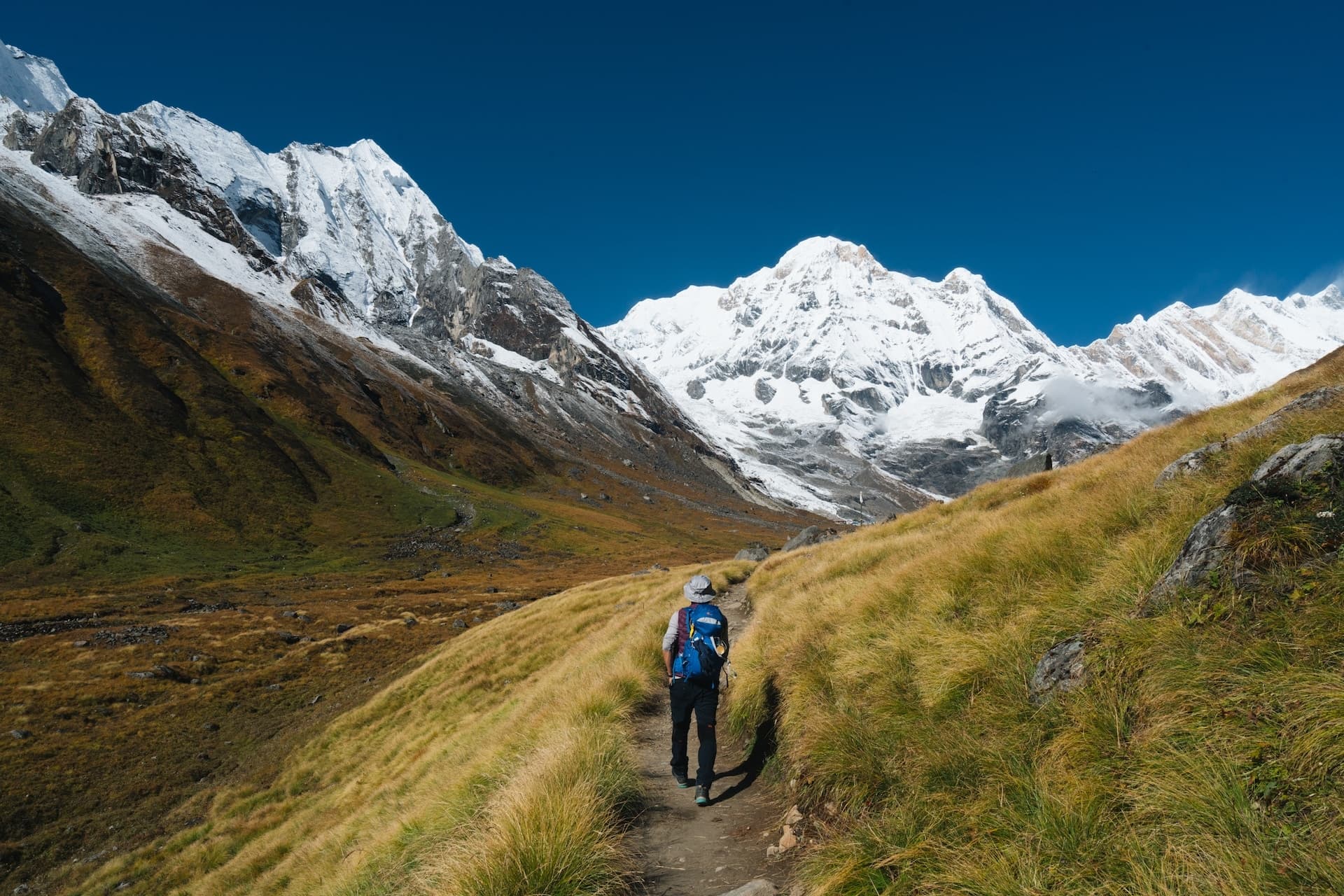
A Himalayan trek is different.
Once you are on the trail, life becomes much quieter.
You might spend several hours walking without seeing a road or hearing a car.
Instead, you hear your footsteps, the wind moving through the trees, a river below the trail, or the occasional sound of bells from a passing mule or yak.
That quiet can feel unusual at first.
Then you begin to appreciate it.
You realise how rarely you give yourself the chance to be completely disconnected from everyday life.
2. You Experience Nepal, Not Just See It
One of the best things about trekking in Nepal is that the mountains are only part of the story.
The trails take you through villages, forests, farmland, rivers, monasteries, suspension bridges, and communities that have lived in the Himalayas for generations.
Depending on your route, you may experience Gurung, Tamang, Sherpa, Thakali, and other Himalayan cultures.
You eat local food.
You stay in mountain lodges.
You meet local people.
You share a cup of tea.
You learn that the Himalayas are not simply a beautiful landscape on a travel brochure.
They are home.
That makes trekking a much more meaningful way to experience Nepal than simply travelling between tourist attractions.
3. The Scenery Is Extraordinary
Of course, we cannot talk about Himalayan trekking without talking about the mountains.
There is something difficult to describe about seeing the world's highest peaks with your own eyes.
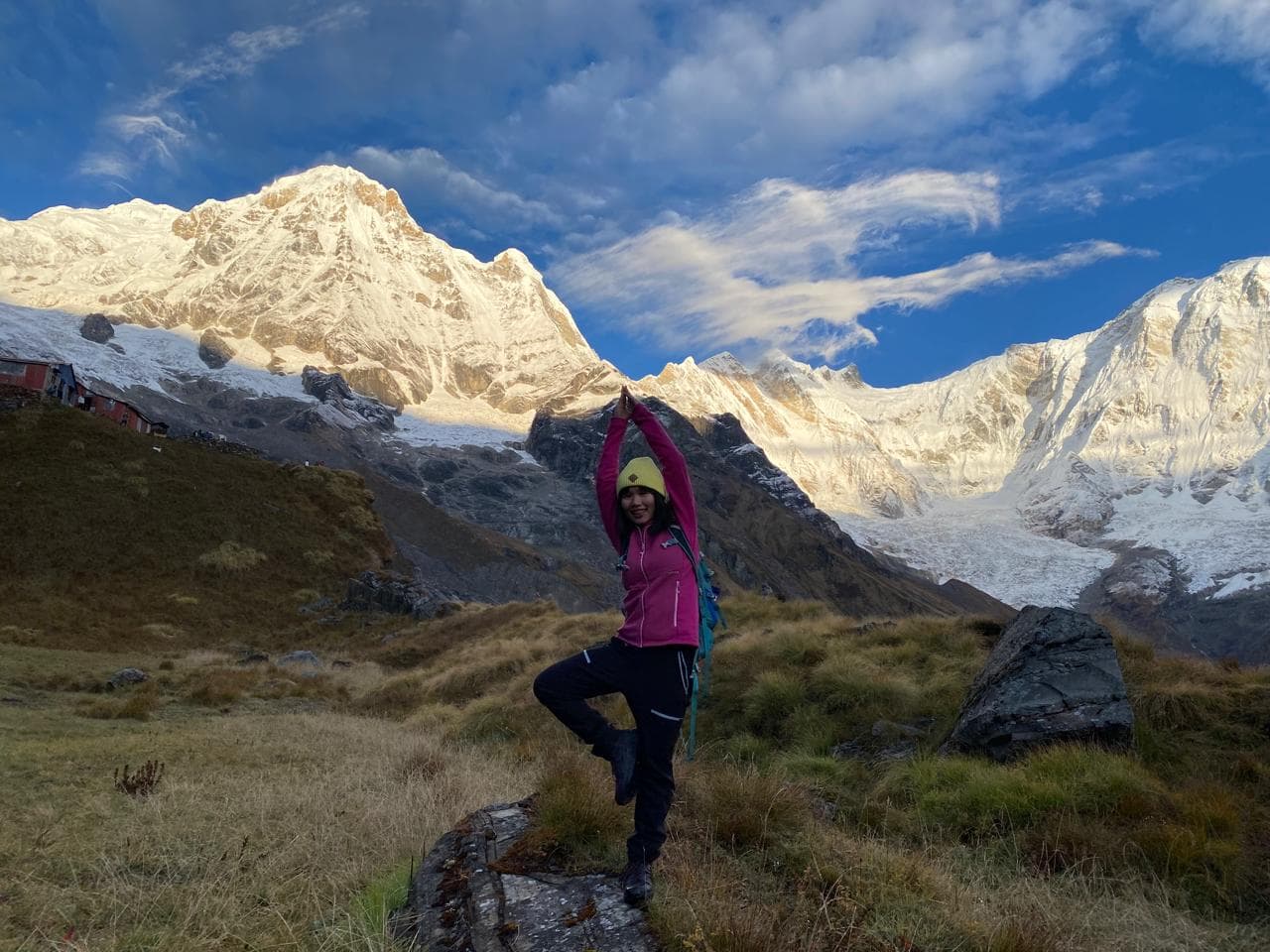
One morning, you may wake up to a wall of mountains glowing in the early sunlight.
Another day, you may walk through a forest and suddenly emerge onto a viewpoint with an enormous Himalayan range in front of you.
The scale is difficult to understand until you are standing there.
Nepal gives you access to some of the most famous trekking regions in the Himalayas, including the Everest, Annapurna, Langtang, and Manaslu regions.
And each has a completely different personality.
Everest Region
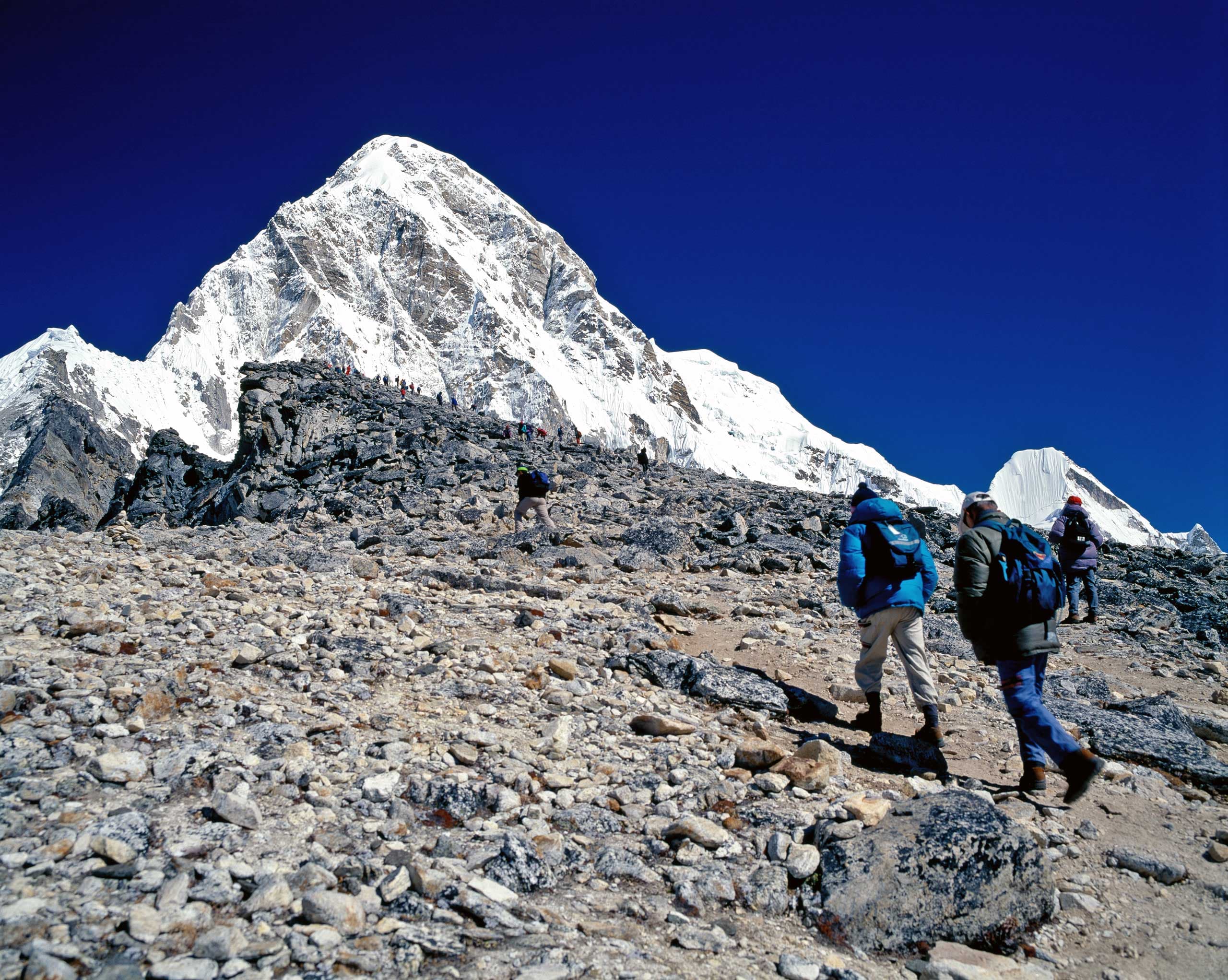
The Everest region is perhaps the most famous trekking destination in Nepal.
The Everest Base Camp Trek is not just about reaching base camp. The journey takes you through Sherpa villages, Buddhist monasteries, suspension bridges, and dramatic Himalayan landscapes before reaching the heart of the Everest region.
For many trekkers, standing beneath Mount Everest is a moment they remember for the rest of their lives.
Annapurna Region
The Annapurna region offers remarkable variety.
You can experience lower valleys, traditional villages, forests, dramatic mountain views, and high-altitude landscapes within a single trek.
The Annapurna Circuit is especially popular with travellers looking for a longer Himalayan adventure and the challenge of crossing high mountain terrain.
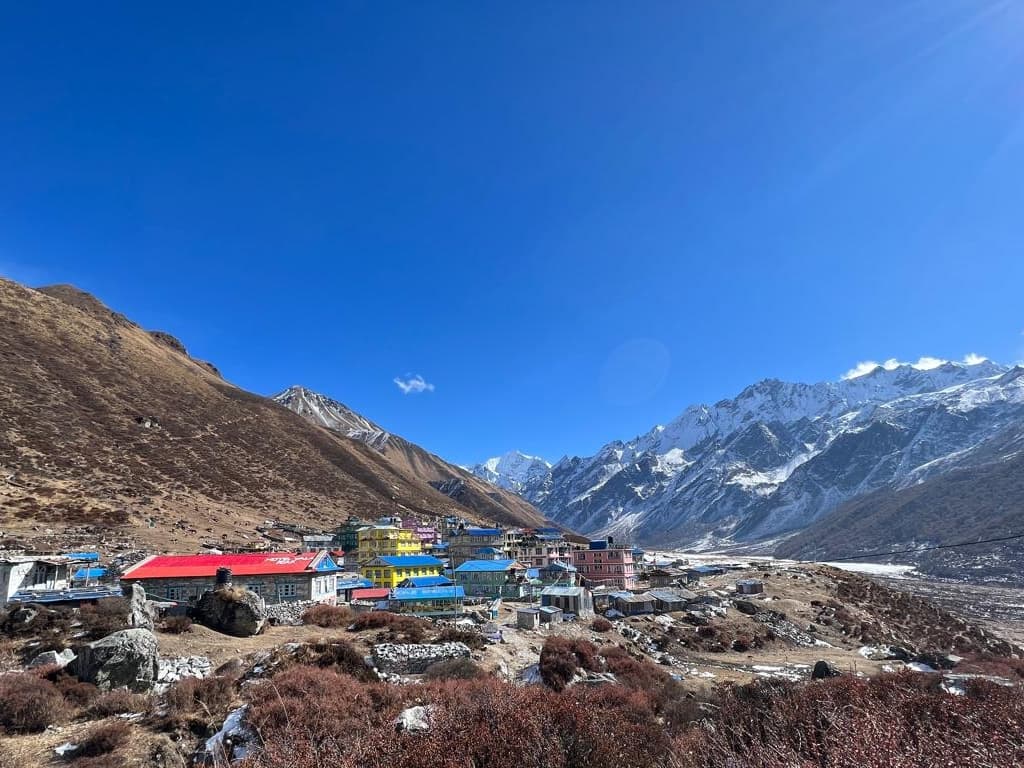
Langtang Valley
If you want a Himalayan experience without travelling as far from Kathmandu, Langtang is an excellent option.
It is known for its dramatic valley landscapes, Tamang culture, yak pastures, and views of Langtang Lirung. Budget Nepal Trek currently describes it as the trekking region closest to Kathmandu.
For travellers with limited time, this can make Langtang particularly appealing.
Manaslu Region
The Manaslu region is a great choice for travellers looking for something quieter and more remote.
The Manaslu Circuit Trek takes you around the world's eighth-highest mountain and through some of Nepal's more secluded Himalayan landscapes.
It can feel more adventurous and less crowded than some of Nepal's better-known trekking routes.
4. Trekking Gives You a Challenge You Can Actually Feel
Modern life has made many things incredibly convenient.
Food arrives at your door.
Cars take you almost everywhere.
You can communicate instantly with someone on the other side of the world.
Convenience is great.
But sometimes, you want to do something difficult simply because it is difficult.
That is what trekking offers.
You carry your backpack.
You walk uphill.
You deal with changing weather.
You wake up early.
Some days your legs will be tired.
There may be moments when you question your decision to come.
And then you reach the day's destination.
You take off your boots.
Sit down with a hot drink.
Look back at the trail.
And realise you actually did it.
That feeling is difficult to replicate on an ordinary holiday.
5. You Learn That You Are Capable of More Than You Think
You do not need to be an elite athlete to trek in Nepal.
There are Himalayan trekking routes suited to different levels of fitness, experience, available time, and adventure.
What matters is choosing the right trek and preparing properly.
For example, Budget Nepal Trek currently categorises its popular routes differently, with Langtang Valley listed as moderate, while Everest Base Camp and Manaslu are positioned as more challenging experiences.
The important thing is not choosing the hardest trek.
It is choosing a trek that challenges you without turning the entire experience into a struggle.
A good trek should leave you tired, proud, and wanting to keep exploring.
6. You Meet People You Would Never Normally Meet
There is a unique social side to trekking.
You may start the morning walking alone and finish the day sharing dinner with people from three different countries.
A conversation begins over breakfast.
Someone asks where you are from.
You walk together for a while.
You stop for tea.
Before long, you are exchanging stories about work, travel, family, food, and life.
The mountains have a funny way of making strangers feel like old friends.
You also develop a different relationship with your guides and local hosts.
They are not simply there to show you the trail.
They can introduce you to local culture, explain the landscape, help you understand the communities you pass through, and make the journey feel much more personal.
7. You Start Appreciating the Small Things
This might be the biggest surprise of Himalayan trekking.
After several hours of walking, the simplest things become incredibly satisfying.
A hot shower.
A warm meal.
A comfortable bed.
A cup of tea.
A dry pair of socks.
Wi-Fi, when you find it.
Even sitting outside and watching the sunset can feel like an event.
Trekking changes your idea of luxury.
You stop needing everything to be perfect.
You start appreciating what is right in front of you.
8. The Mountains Put Your Life Into Perspective
There is something humbling about standing beneath a mountain that is thousands of metres higher than anything you see in your everyday life.
Your work problems suddenly seem a little less overwhelming.
Your overflowing inbox can wait.
The things you thought you absolutely needed to deal with today suddenly feel less urgent.
The mountains have existed for millions of years.
Your deadline can probably survive another day.
That perspective is one of the quiet gifts of trekking.
You return home with the same job, the same responsibilities, and the same life.
But sometimes you return with a slightly different view of it.
9. You Can Choose Your Own Himalayan Adventure
There is no single way to trek in the Himalayas.
That is another reason Nepal is such an appealing destination.
You can choose a shorter trek if you have limited time.
You can take on a longer circuit if you want a serious challenge.
You can travel privately with your own itinerary.
Or you can join a group and meet other travellers along the way.
At Budget Nepal Trek, routes currently include the Annapurna, Everest, Langtang, and Manaslu regions, with custom itineraries available for travellers who want a different schedule or experience.
The right trek is not necessarily the most famous one.
It is the one that fits your time, fitness, interests, and idea of adventure.
10. You Return Home With a Story, Not Just Photos
A good holiday gives you photographs.
A great trek gives you stories.
You remember the morning you watched the mountains change colour.
You remember the stranger who became your trekking partner.
You remember the village where you had the best meal of the trip.
You remember the day your legs were exhausted but you kept walking.
You remember reaching a viewpoint and realising that every difficult step had been worth it.
Years later, those are the things you talk about.
Not how comfortable the hotel was.
Not how quickly you got from one tourist attraction to another.
But how you felt standing in the Himalayas.
Is Trekking in Nepal Worth It?
For most travellers looking for adventure, nature, culture, and a genuine break from everyday life, yes, trekking in Nepal is absolutely worth considering.
But the experience is not about ticking Mount Everest off a bucket list.
It is about the journey.
It is about walking through landscapes that feel completely different from home.
It is about meeting people.
It is about challenging yourself.
And sometimes, it is simply about spending a few days without needing to be anywhere other than where your feet are taking you.
Which Himalayan Trek Should You Choose?
There is no universal answer.
If you dream of standing beneath the world's highest mountain, consider Everest Base Camp.
If you want dramatic landscapes and a classic Himalayan circuit, look at Annapurna.
If you have less time but still want a genuine Himalayan experience, Langtang Valley may be a better fit.
If you want a quieter and more remote adventure, Manaslu could be the route for you.
The best Himalayan trek is the one that matches your expectations, fitness, available time, and travel style.
Your Himalayan Journey Starts With One Step
You do not need to know everything before you decide to trek in the Himalayas.
You do not need to be an experienced mountaineer.
And you certainly do not need to have your entire journey figured out from day one.
You just need a reason to go.
Maybe you want to challenge yourself.
Maybe you want to disconnect.
Maybe you want to see the Himalayas with your own eyes.
Or maybe you simply feel that it is time to do something different.
Whatever your reason, Nepal is waiting.
The trail will be there.
The mountains will be there.
And eventually, all you have to do is take the first step.
Ready to Trek in Nepal?
Explore Himalayan trekking with a local team that understands the mountains, the routes, and the people who call them home.
From Everest Base Camp and Annapurna Circuit to Langtang Valley and Manaslu Circuit, choose a trek that fits your adventure, schedule, and fitness level.
Your Himalayan story starts here.